
The $4,800 NFT Sale That Almost Didn't Happen
A digital illustrator in Buenos Aires lists a piece on Foundation. A collector in Singapore wants to buy it for 1.5 ETH but holds USDC on Polygon. The artist needs ETH on Arbitrum to cover gas for an upcoming mint drop. This is exactly where blockchain payment services stop being a buzzword and start being load-bearing infrastructure. Stripe rejects the transaction. The artist's local bank flags it as "high-risk crypto activity." Wise can't route to a self-custody wallet. PayPal's crypto service won't send to external addresses.
The buyer has the funds. The artist has the work. The rails between them — the ones traditional finance has refined over 50 years — are the bottleneck.
Blockchain payment services exist because three legacy assumptions broke simultaneously: that money is denominated in one currency at a time, that intermediaries must hold funds during settlement, and that recipients must share identity documents with platforms they've never met. Every section below unpacks one piece of how the new stack works, where it fails, and how to evaluate the services competing to own it.

Table of Contents
- Why Stripe, PayPal, and SWIFT Can't Serve Crypto-Native Workflows
- The Architecture Underneath a Blockchain Payment Service
- The Five Decisions That Separate Good Blockchain Payment Services From Bad Ones
- Six Workflows Where Blockchain Payment Services Are the Only Option That Works
- The 10-Point Technical & UX Audit for Any Blockchain Payment Service
- Hard Questions About Blockchain Payment Services, Answered Without Spin
- Your First-Week Implementation Checklist for a Blockchain Payment Service
Why Stripe, PayPal, and SWIFT Can't Serve Crypto-Native Workflows
The case against legacy processors isn't ideological. It's operational. Five concrete failure modes explain why blockchain payment services emerged as a distinct category rather than a feature inside existing tools.
The KYC wall is structural, not optional. Stripe requires a registered business entity, a tax ID, and a bank account in one of the 46 countries it currently supports. PayPal requires similar onboarding. This isn't a policy a sales rep can wave through — it's regulatory architecture inherited from card-network rules and FinCEN requirements that predate Bitcoin by decades. A freelance dev in Lagos, a streamer earning tips on Farcaster, or an artist with no LLC isn't being denied access. They're being told the category was built for someone else. Blockchain payment services flip the verification model: a wallet signature proves control of an address, and that's the only credential the protocol cares about.
Custody during float is the silent risk. When Stripe processes a $1,000 charge, those funds sit on Stripe's balance sheet for 2–7 days before payout. Same with PayPal. Same with every traditional processor. The CFPB issued a 2025 advisory warning that non-custodial crypto solutions have consumer-protection gaps — and they do. But the inverse risk is rarely named in the same breath: custodial solutions have platform-solvency gaps. The FTX collapse pattern wasn't a crypto-specific anomaly. Any processor holding your float between collection and settlement is a counterparty you cannot audit in real time. Non-custodial blockchain payment services eliminate that window because the funds never touch the service's balance sheet.
Settlement speed is mismatched by orders of magnitude. ACH clears in 1–3 business days. SWIFT in 1–5 business days. Blockchain finality on Polygon or Arbitrum takes under 10 seconds for the transaction itself, with practical settlement (enough confirmations for the recipient to act on the funds) measured in minutes for most L2s. According to payments infrastructure provider Lightspark, the speed difference isn't incremental — it changes which workflows are economically viable. Micro-tipping, streaming payments, and same-day contractor settlement are all impossible on rails that wait until Tuesday.
Hidden FX markups quietly tax cross-border flows. Traditional cross-border payments embed 3–7% in spread on currency conversion, and the spread is not itemized on the invoice. The customer sees one "exchange rate" line; the markup lives inside it. On-chain swaps work differently — the spread is visible block-by-block, the slippage is quoted before signature, and the fee that goes to the routing protocol is a separate transaction event on the block explorer. You can argue about whether it's cheaper. You can't argue about whether it's visible.
The cross-chain problem is the killer. No legacy processor handles "payer sends USDC on Base, receiver wants WBTC on Arbitrum." There is no API call. There is no workaround. It's outside the model. This is the exact problem DEX aggregators with cross-chain routing solve — protocols like 1inch Fusion+, LI.FI, and Socket. The 1inch Network documentation describes how intent-based routing queries 50+ liquidity sources to settle the swap atomically, typically within 1–3 seconds of execution. A blockchain payment service that integrates this kind of routing isn't a better Stripe. It's a different category — one that can express the actual intent of a Web3 payment instead of forcing the payer to bridge, swap, and send in three separate steps.
Stack these five mismatches together and the gap they describe isn't a feature deficiency. It's a different problem entirely. Blockchain payment services are the category that emerged to address all five at once.
A traditional payment processor can route fiat between bank accounts. It cannot route intent across blockchains.
The Architecture Underneath a Blockchain Payment Service
Move from why to how. Every blockchain payment service, regardless of brand, is built on four layers. Understanding them lets you evaluate any new entrant in about 10 minutes instead of reading marketing copy for an hour.
The link/request layer is the user-facing surface. A URL or QR code encodes the recipient's wallet address, the requested token, the chain, and (optionally) the amount. Think of it as a Stripe Payment Link without the hosted invoice page or the platform sitting in the middle. The link is trustless — it's a self-executing instruction set, not an account on someone's server.
The wallet-connect layer is what lets the payer interact. Standards like WalletConnect v2 and EIP-1193 enable any payer's wallet (MetaMask, Rabby, Phantom, Coinbase Wallet, Frame) to read the request and prepare a signed transaction. On the token-side, the Ethereum Foundation's ERC-20 standard defines balance tracking, transfers, and approval mechanics — which is why a single payment service can accept USDC, DAI, WBTC, and dozens of other tokens without writing custom code for each.
The conversion/routing layer is where the modern category gets interesting. If the payer holds USDT on BNB Chain and the recipient wants ETH on Arbitrum, this layer queries dozens of liquidity sources, finds the best route, and executes the swap. DEX aggregators like 1inch Fusion+, LI.FI, and Socket live here. According to 1inch documentation, well-engineered routing fills the swap within 1–3 seconds at the quoted price or reverts cleanly. This layer is the difference between a payment service that requires the payer to pre-bridge their funds (most first-generation tools) and one that accepts any input and delivers any output (the current standard).
The settlement layer is the final hop: funds land directly in the recipient's self-custody wallet. No intermediate balance. No platform float. No 1–7 day payout window. The recipient sees the transaction on Etherscan or the relevant block explorer the moment it confirms.

The architectural contrast with traditional processors is sharp enough to map row-by-row.
| Architectural Layer | Traditional Processor | Blockchain Payment Service |
|---|---|---|
| Payment request | Hosted invoice on processor's servers | Self-executing link tied to wallet |
| Identity verification | KYC on receiver, often payer | Wallet signature only |
| Custody during transit | Platform holds funds 1–7 days | Funds never touched by service |
| Settlement rail | ACH, SWIFT, card networks | L1 or L2 blockchain |
| Cross-currency support | Single fiat at a time, manual FX | Any token in → any token out |
| Settlement speed | 1–5 business days | 5 seconds – 5 minutes |
| Fee visibility | Embedded in spread + flat fee | On-chain visible, per-swap |
| Failure recovery | Chargeback / dispute resolution | Smart-contract revert or retry |
The "custody during transit" row is the structural difference everything else flows from. When no party holds funds, there's no balance sheet to attack, freeze, or regulate at the processor level. Risk shifts — it doesn't disappear. Dr. Darrell Duffie of Stanford makes this point sharply in the Journal of Financial Economics: the "trust-minimized" framing is misleading because users must still trust the underlying protocol design, validator integrity, and their own wallet security. Trust is shifted from platform solvency to smart-contract correctness and signing discipline.
That trade-off has a real downside. If a freelancer ships work and the client pays in a stablecoin that later depegs, there's no Visa-style dispute window. There's no chargeback. Recipients have to verify before signing — and that verification responsibility lives entirely on their side of the transaction. This is the trade most users accept in exchange for self-custody, but it's worth naming out loud.
WavePay is one working example of this exact architecture: a link layer, WalletConnect-style payer interaction, 1inch Fusion+ routing for the conversion layer, and direct-to-wallet settlement with no platform balance sheet. It's not the only service built on this stack, but it's a clean reference point for what each layer looks like when implemented end-to-end.
The Five Decisions That Separate Good Blockchain Payment Services From Bad Ones
Feature lists lie. Trade-off frameworks don't. Every blockchain payment service makes five core decisions, and each decision has an honest cost on both sides. The matrix below isn't a scorecard — it's a way to map a service against your actual workflow.
Custody model. Non-custodial means the service literally cannot hold your funds — not as a policy promise, but as a technical impossibility. Custodial means the platform takes possession during settlement. The CFPB advisory is honest about the trade: non-custodial has weaker recourse if you fat-finger an address; custodial carries platform-solvency risk of the FTX class.
Chain coverage. Ethereum mainnet only means a small payer pool and high gas costs. Eight or more chains (Polygon, Arbitrum, Base, Optimism, BNB, Avalanche, Solana, Ethereum) means a larger reach, more attack surface, and more swap-routing complexity to audit.
KYC posture. Required KYC delivers legal clarity in regulated markets and easier off-ramp partnerships, at the cost of friction for global users. No KYC aligns with Web3 ethos and onboards in 60 seconds, at the cost of restricting you to crypto-native customers and pushing tax-self-reporting responsibility entirely onto you.
Token flexibility. Fixed recipient token (you always receive USDC) is simple and predictable for accounting. Payer-choice settlement — payer picks what to send, you pick what to receive, swap happens via aggregator — is the modern default. Hybrid models let recipients toggle per-link.
Fee model. Flat percentage per transaction is transparent. Tiered percentage rewards volume. Subscription is best for high-volume creators but punitive for occasional senders. The fee you see is often only part of it — slippage on the underlying swap is the real cost, and it's hidden inside the rate quote unless you verify against a direct aggregator price.
| Decision Point | Option A | Option B | When A Wins | When B Wins |
|---|---|---|---|---|
| Custody | Non-custodial | Custodial | You hold keys confidently | You need dispute resolution |
| Chain coverage | 1–2 chains | 6+ with auto-swap | Niche audience, low gas | Global, mixed-chain payers |
| KYC | None | Required | Crypto-native audience | Fiat off-ramp critical |
| Token flexibility | Fixed recipient | Payer-choice + swap | Predictable accounting | Max payer conversion |
| Fee model | Flat % | Subscription | Low volume | High recurring volume |
Map this against named services and the categories become obvious. NowPayments and CoinGate sit on the custodial + KYC + flat-fee side of every row — they're built for merchants who want a Stripe-like experience with crypto inputs. BTCPay Server sits on non-custodial + self-hosted + technical-overhead — built for operators who want full sovereignty and don't mind running their own node. Cryptomus and Passimpay occupy custodial middle-ground positions with merchant-focused tooling. WavePay sits on non-custodial + 6+ chain auto-swap + no-KYC + payer-choice + flat-percentage — built for individual creators and freelancers whose payers are themselves crypto-native.
None of these is "better." Each is correct for a different user. The answer to "which blockchain payment service is best" depends entirely on whether you need refund flows through the platform, whether your payers already hold a wallet, and whether you're willing to accept tax-self-reporting responsibility in exchange for KYC-free onboarding.
Dr. Garrick Hileman, research fellow at the Cambridge Centre for Alternative Finance, writing in the Cambridge Journal of Regions, Economy and Society, puts it bluntly: most businesses underestimate the operational complexity of managing multiple chains and tokens. This isn't set-and-forget infrastructure. Your decision matrix needs to reflect not just what works on day one but what you can operate without dedicated headcount on day 180.
Choosing a blockchain payment service is not about finding the best one. It is about aligning custody, chain coverage, and settlement currency with your actual workflow.
Six Workflows Where Blockchain Payment Services Are the Only Option That Works
Generic use cases waste your time. Specific personas and the exact traditional-finance failures they encounter do not.
- The Cross-Border NFT Artist. Sells a 0.8 ETH piece on Foundation to a buyer in Vietnam. Wants settlement in USDC on Polygon to pay her co-creator in Mexico. Stripe doesn't touch crypto. Wise doesn't speak Ethereum. A blockchain payment link with auto-swap is the only single-step path from buyer's wallet to her chosen settlement token, on her chosen chain, without three intermediate bridge transactions.
- The Web3 Smart Contract Auditor. Invoices a DAO for 12,000 USDC. The DAO's treasury holds DAI and pays from a Gnosis Safe multi-sig. The auditor wants USDC on Arbitrum to minimize gas on her own payroll splits. A payment link with auto-swap removes three rounds of "can you bridge that first?" emails and lets the DAO sign one transaction from its existing treasury balance.
- The Farcaster Streamer Taking Micro-Tips. Receives 200+ tips per stream, ranging from $0.50 to $40, across 14 different tokens. Manual swap fees would eat 80% of small tips. A payment link that aggregates and auto-routes makes the economics work at all. Stripe can't even onboard the use case — account minimums, ACH costs, and merchant-category-code restrictions make micro-tipping in mixed assets a structural non-starter.
- The Argentine Freelance Designer. No US bank account, no Stripe access (Argentina remains on Stripe's limited-pilot tier as of 2025). A crypto payment link isn't a preferred option — it's the only path that doesn't involve a relative with a US address and a power-of-attorney workaround. According to cross-border payments analysis from BVNK, stablecoin payment volumes specifically have grown into the trillions partly because of exactly this category of user.
- The DeFi Protocol's Bug Bounty Payout. An anonymous researcher reports a critical vulnerability. The protocol wants to pay 50,000 USDC. The researcher refuses KYC for obvious reasons — disclosing identity to a centralized processor would create a permanent record linking them to a high-value transfer from a protocol they just disclosed against. A non-custodial, no-KYC payment link respects both parties' constraints in a way no other rail can.
- The DAO Contributor Network. 40 contributors across 17 countries paid monthly. The DAO treasury holds USDC on mainnet; contributors want different tokens on different chains. Payment links generated programmatically via API let the DAO automate the entire payroll without holding addresses on a centralized roster or running a custodial payroll vendor that no contributor would tolerate.
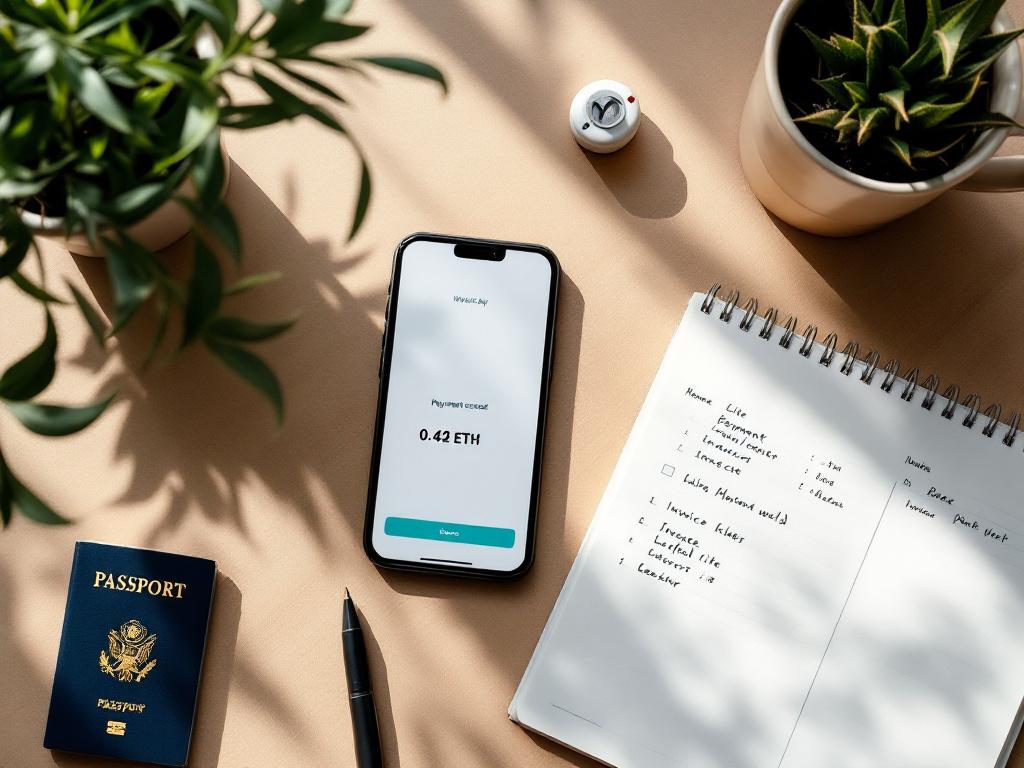
There are workflows where blockchain payment services are the wrong tool. Three of them, named directly so you don't waste a quarter trying to force the fit:
- B2B enterprise invoicing where your client uses Oracle Financials. They need an invoice number tied to a PO and an ACH reference. Don't fight that battle — bill in fiat and convert on your side.
- Local in-person retail. A coffee shop in Ohio. The payer friction (install wallet, fund wallet, sign tx, wait for confirmation) is fatal to a 90-second checkout flow.
- Anywhere you need same-day fiat in a bank account. Blockchain payment services don't off-ramp. You'd need a separate service (a CEX or a fiat off-ramp provider) and that introduces the KYC and settlement-delay characteristics you were trying to avoid.
The 10-Point Technical & UX Audit for Any Blockchain Payment Service
A practical evaluation rubric. Every item is a verifiable check, not a vague preference. Run this on any service before you route a real client's payment through it.
- Verify true non-custodial settlement. Send a test payment and trace the transaction on Etherscan or Polygonscan. Funds should move payer wallet → swap contract → your wallet in a single transaction or atomic sequence. If there's an intermediate "platform wallet" holding funds for any duration — even 30 seconds — it's custodial regardless of marketing language. The block explorer is the only ground truth.
- Identify the liquidity source. Ask which DEX aggregator or routing protocol powers cross-chain swaps. 1inch Fusion+, LI.FI, and Socket are reputable and documented. "Proprietary routing" with no disclosed sources is a slippage red flag — it means the service can quote you any rate without external benchmark. The 1inch documentation is openly available and lets you sanity-check any aggregator-claimed quote against a direct one.
- Audit supported chains against your payer base. If you stream to Farcaster users, you need Base. If you sell NFTs on Foundation, you need Ethereum and Arbitrum. If you do DeFi work, you need Polygon and possibly Optimism. Count chains relevant to your audience, not total chain count. A service supporting 18 chains is worse than one supporting 6 if your 6 aren't in the 18.
- Count the token whitelist on both sides. Payer side should support 20+ major tokens (USDC, USDT, ETH, WBTC, DAI, plus chain-native stablecoins). Recipient side: how many target tokens can you choose? Fixed-token services lock you into accounting overhead, since every off-ramp or operational expense in a different token requires a manual swap later.
- Test link customization and persistence. Can you set a fixed amount? Open-ended donation-style? Set an expiry on the link? Reuse a link across multiple payments? Custom slug for branding? These are creator-UX details that compound across hundreds of transactions and determine whether the tool fits your actual workflow or fights it.
- Check for API and webhook access. Programmatic link creation, webhook notifications on payment confirmation, status polling endpoints. Critical if you process more than 10 payments a week or build automated invoicing. Without an API, you're copy-pasting links forever, which works at hobby scale and breaks at any kind of operational scale.
- Demand on-chain fee transparency. The service's cut should be visible as a separate transaction event on the block explorer. If fees are "absorbed in the swap rate," you're paying invisible slippage. Run a test swap of $100 worth of one token to another and compare the output to a direct 1inch quote for the same pair. The difference is your real fee.
- Confirm privacy posture. Does the service collect IP addresses, wallet-history analytics, or referral data? Read the privacy policy literally — not the marketing page about being "Web3-aligned." Services that genuinely minimize logs say so in their terms. Services that don't are forwarding your wallet history to ad-tech vendors regardless of their branding.
- Time the settlement. From payer-confirms to funds-in-wallet, on a real transaction during a normal-traffic hour (avoid Sunday 3am UTC tests — they're misleadingly fast). Target: under 60 seconds for L2-to-L2 swaps, under 3 minutes for cross-L1. OpenZeppelin's security guidelines note that high-value transactions warrant more confirmations, so factor your typical transaction size into what counts as "settled."
- Test the failure path. Deliberately initiate a swap on a low-liquidity token pair. Does the service revert cleanly and refund your input token? Or does it leave you holding an unwanted intermediate token? The recovery UX is where mediocre services reveal themselves — anyone can handle the happy path, but a stuck swap on a Tuesday afternoon will tell you more about a service than its homepage ever will.
Non-custodial does not mean no risk. It means your risk lives in the smart contract and your wallet, not on a platform's balance sheet.
Hard Questions About Blockchain Payment Services, Answered Without Spin
Six questions that surface the real hesitations, not beginner definitions.
Q1: If no one holds my funds, what's my recourse when something goes wrong?
Honestly, limited. With a custodial service, you can dispute, charge back, or escalate to a regulator. With non-custodial, your recourse depends on the smart-contract design — most services include a revert path if a swap fails, but if you sign a transaction with the wrong amount or wrong address, the funds are gone. The trade-off: you eliminate platform-solvency risk (FTX, BlockFi, Celsius) in exchange for owning input risk. Mitigate by testing with small amounts first and using wallets with transaction-simulation features like Rabby or Frame, which preview the actual state change before you sign.
Q2: What happens during network congestion or a stuck swap?
Modern DEX aggregators like 1inch Fusion+ use intent-based architecture — your transaction either fills at the quoted price or doesn't execute. If a swap can't route within the slippage tolerance, it reverts and your original token stays in your wallet. The failure mode gets messy when liquidity dries up mid-route (rare on major tokens, common on long-tail pairs). The BIS Annual Economic Report 2025 noted 17% transaction failure rates on decentralized payment networks during the March 2025 correction. That's the worst-case stress scenario, not normal operation — but it's worth knowing the ceiling.
Q3: Can I use this to invoice an enterprise client who's never touched crypto?
Technically yes. Practically no — unless the client has crypto-curious finance leadership. You'd be asking them to fund a wallet, get a treasury approval, learn WalletConnect, and explain a USDC transfer to their auditor. For Web3-native clients (other protocols, DAOs, crypto funds), it's a 30-second flow. For traditional enterprise, stick to invoicing in fiat and converting on your side after settlement. The category isn't designed to convert non-crypto payers; it's designed to remove friction for payers who already hold wallets.
Q4: Does using a no-KYC service hide me from tax authorities?
No. The blockchain is a public ledger. The IRS contracts with Chainalysis, TRM Labs, and others to map wallets to identities, particularly through centralized exchange off-ramps where you eventually convert to fiat. No-KYC means the service doesn't report. It does not mean transactions are private. US recipients still owe self-reporting on income at fair-market value on receipt. Treat no-KYC as a privacy-and-friction feature, not a compliance shield. (Not legal advice — talk to a CPA who actually knows crypto, not one who learned about it last Tuesday.)
Q5: What if the buyer sends me a token I can't use on a chain I don't want?
With a payer-choice service that auto-swaps, this is solved at the protocol level — the swap happens before the funds reach you, and you receive only the token and chain you specified. With a fixed-recipient service that doesn't auto-convert, you're stuck doing manual swaps and paying double gas. This is the single biggest differentiator between modern blockchain payment services and first-generation crypto-acceptance tools that just generated a static address and called it a product.
Q6: I'm a creator with maybe 5 payments a month. Is this overkill?
No, and this is the use case the category was built for. The setup is a one-time wallet connection and link generation. After that, every payment is one click for the payer and zero work for you. The complexity of "running blockchain payments" was real in 2021, when you genuinely needed to understand bridges and gas tokens. In 2025, it's lower-friction than setting up Stripe for a sole proprietor in a non-supported country — and the recurring cost is whatever percentage the service takes per transaction, not a monthly platform fee for a tool you barely use.
Your First-Week Implementation Checklist for a Blockchain Payment Service
End with action, not summary. Five concrete steps you can execute in your first 7 days. Each is verifiable.
- Day 1 — Audit your payer base. List the last 10 payments you received or expect to receive. Note which chains and tokens senders prefer. If 7 or more are crypto-native and on L2s, you've validated the use case. If most of your payers are traditional fiat senders, run a Stripe + blockchain payment service hybrid for a quarter before going crypto-only. The data should drive the decision, not the aesthetic of the rails.
- Day 2 — Set up a clean recipient wallet. Don't use your trading or DeFi wallet for incoming payments. Generate a fresh address — MetaMask, Rabby, or a hardware wallet — dedicated to incoming payment flow. This isolates risk if a signing mistake happens elsewhere and makes accounting clean at year-end. Label the address in your block explorer so every incoming transaction is identifiable at a glance.
- Day 3 — Generate and test a payment link. Create your first link with a $1 amount. Send it to yourself from a second wallet (or a friend's). Trace the full transaction on Etherscan or Polygonscan. Confirm the funds land in your recipient wallet within 60 seconds and the fee matches the advertised rate. If anything in that sequence is off, debug now — not after you've sent the link to a paying client.
- Day 4 — Stress-test the swap. Send a payment in a less-common token (AAVE, LINK, or any mid-cap) to be received as USDC on a different chain. Confirm slippage stays under 1.5% and settlement still works. This is where weak services break, and where the difference between a marketing-page demo and production-ready infrastructure becomes visible.
- Days 5–7 — Migrate one real client. Pick the most crypto-native client or buyer in your pipeline. Replace the existing invoice or sales flow with a payment link. Document any friction they hit — questions about which token to send, confusion on the wallet-connect step, anything. Iterate on link presentation (amount, message, expiry) until the flow is one click on their end. After one successful migration, the next nine are mechanical.
The difference between reading about blockchain payment services and running your business on them is one tested link. Generate it.